



How PBL Lami Tubes Are Manufactured
How PBL Lami Tubes Are Manufactured: From Laminate Roll to Capped Tube
Published by Antilla Propack on 21 October 2026
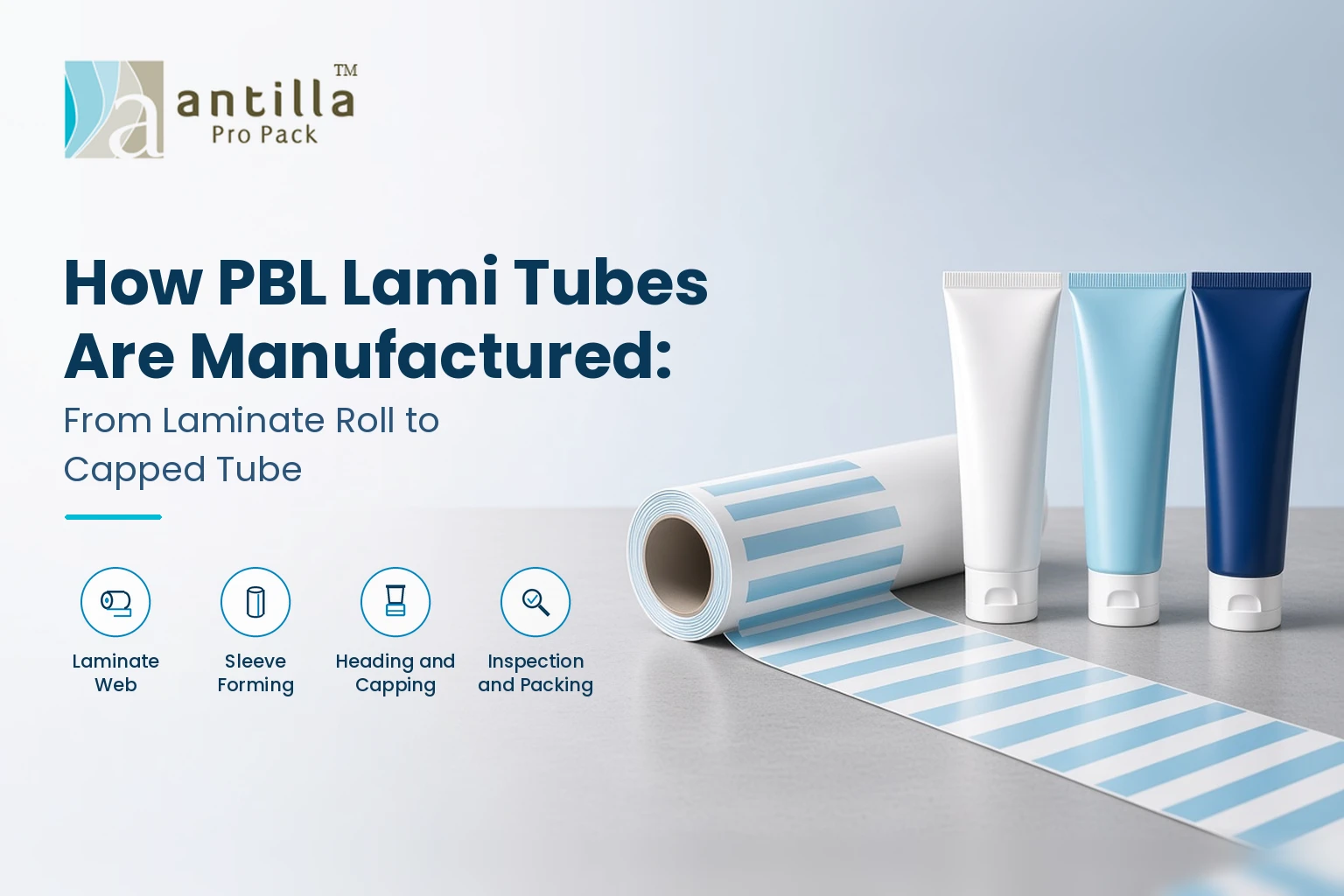
A finished PBL tube looks simple: a printed body, a shoulder and a cap. Behind it is a sequence of precise steps, each one affecting how the tube looks, seals and protects the product. Understanding the process helps brands ask better questions, read specifications with confidence and spot quality problems early.
For an introduction to the material and its layers, read our guide to PBL lami tubes. This article follows a PBL tube through production.
Step 1: The Laminate Web
Production starts with a multi-layer plastic laminate supplied on large rolls. In a PBL structure, outer and inner polyethylene layers sandwich a barrier layer, usually EVOH, bonded with tie layers. The laminate is checked for thickness, bond strength and surface quality before use.
Step 2: Printing
The flat laminate is printed while still on the roll. Printing flat allows sharp, multi-colour designs with fine text and tight registration. Lacquers then add gloss, matte or soft-touch effects and protect the ink. Colour is checked against the approved proof. See examples of printed lami tubes.
Step 3: Slitting
The printed web is slit into narrower reels, each matching the circumference of the tube to be made, plus the overlap needed for the side seam.
Step 4: Sleeve Forming and Side-Seam Welding
On the tube-making machine, the laminate strip is wrapped around a mandrel to form a continuous sleeve. The overlapping edges are heat-welded to create the side seam. A strong, narrow, even seam is essential for appearance and for preventing leaks or splits.
Step 5: Cutting
The continuous sleeve is cut into individual tube bodies of the specified length.
Step 6: Heading
The shoulder and neck are formed onto one end of each body, typically by compression or injection moulding molten polyethylene so it fuses to the sleeve. The neck design decides the orifice size and the thread or fit for the cap.
Step 7: Capping
Caps are applied automatically. Options include screw caps, flip-top caps and stand-up caps, all from our tube caps range.
Step 8: Inspection and Packing
Finished tubes are inspected, counted and packed open-end up in cartons, ready for the brand's filling line.
Quality Checks Along the Way
| Check | Why it matters |
|---|---|
| Laminate thickness and bond strength | Prevents delamination and weak spots |
| Print registration and colour | Keeps branding consistent across batches |
| Side-seam strength | Prevents splitting when squeezed or dropped |
| Shoulder and neck dimensions | Ensures caps fit and seal properly |
| Cap fit and opening force | Avoids leaks and consumer frustration |
| Leak and burst tests | Confirms the tube withstands handling |
| Tube length and diameter | Ensures compatibility with filling machines |
What Happens at the Brand's Plant
After delivery, the brand fills each tube through the open end and seals it, usually with hot air or another heat-sealing method suited to the laminate, adding a crimp pattern and batch coding. Seal settings must be tuned to the laminate, so it helps to run trials before full production. Choosing the right tube size first is covered in our PBL tube sizes and capacity guide.
Why Process Control Matters
Most tube problems trace back to a specific production step: colour drift to printing, splits to the side seam, leaks to the neck or cap fit, and filling jams to dimensional variation. A manufacturer that controls each step in-house can find and fix problems quickly. Learn more about our research and development work.
About Antilla Propack
Established in 2009 in Rajkot, Gujarat, Antilla Propack manufactures, supplies and exports laminated tubes for cosmetic, pharmaceutical, toothpaste and food brands, including ABL tubes, PBL tubes and plain lami tubes. We serve customers across India and overseas through our network.
Related Reading
- PBL lami tubes: structure, benefits and uses
- PBL lami tube sizes and capacity guide
- Toothpaste laminated tubes
Frequently Asked Questions
How are PBL lami tubes made?
A printed multi-layer plastic laminate is slit, formed into a sleeve, welded along the side seam, cut to length, fitted with a moulded shoulder and neck, capped, inspected and packed for filling.
Is the printing done before or after the tube is formed?
In laminated tubes, printing is done on the flat laminate before the tube is formed, which allows detailed multi-colour artwork.
What is the side seam on a lami tube?
It is the welded overlap where the laminate edges are joined to form the tube body. A narrow, strong seam gives a clean look and prevents splitting.
Who fills and seals the tubes?
The brand or its contract filler fills the tubes through the open end and heat-seals them, adding a crimp and batch code.
What quality tests are done on lami tubes?
Typical checks include laminate thickness and bond strength, print colour and registration, seam strength, neck dimensions, cap fit, leak and burst tests, and tube dimensions.
Discuss Your PBL Tube Requirement
Contact Antilla Propack or call +91 951-081-2341 with your product, fill volume, artwork and quantity.